
Chemical engineering × AI

Research

反応・流体・物性の視点で考える基盤技術開発

Foundational technologies across reactions, fluids, and thermophysical properties

理論モデルとAIを組み合わせた手法により
プロセス設計に資する技術を提案します。

We combine theoretical models with AI to develop technologies
that support chemical process design.

Research philosophy

理論式・経験則を融合した
ハイブリッドAI
Hybrid AI integrating
physics and data

村上研究室では、化学プロセスで観測される複雑な現象を、理論モデルとAIの組み合わせにより理解し、少ないデータからでも信頼できる予測手法を実現します。

At Murakami Laboratory, we combine theoretical models with AI to understand complex phenomena in chemical processes and develop reliable predictive methods from limited data.

化学反応、流動現象、基礎物性など化学工学関連領域を広くカバーしています。

Our research spans chemical reactions, fluid dynamics, and thermophysical properties across chemical engineering.

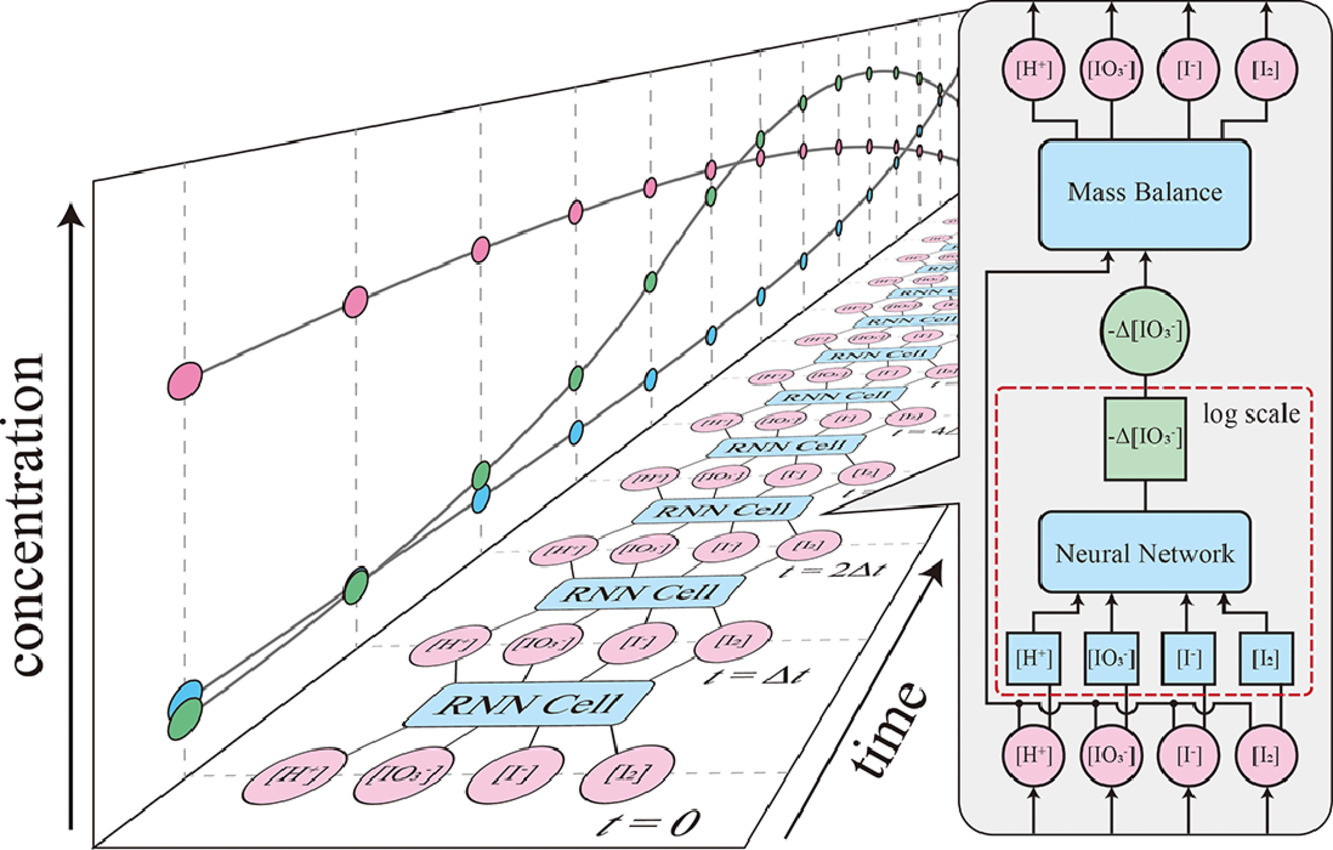
RNNによる時系列濃度変化の学習と物質収支を組み合わせた反応解析のグラフィカルアブストラクト
01 Published graphical abstract / Reaction analysis

01 / Physics-informed reaction analysis

既存式を拡張し
未知の挙動を学習
Extending established models
to learn unseen behavior

既存式をテンプレートに解釈性の高いAI反応速度式を実現

Interpretable AI-based kinetic models built on established rate equations

反応工学で蓄積された速度式や物質収支を土台に、Neural ODEやRNNなどの連続時間モデルを組み合わせます。データだけに依存せず、物理的な意味を保ったまま未知の反応挙動を補うことを目指します。

We integrate rate laws and material balances from reaction engineering with continuous-time models such as Neural ODEs and RNNs. Rather than relying on data alone, we seek to capture previously unseen reaction behavior while retaining physical meaning.

開発した反応速度モデルは、Dushman反応などを利用した微小空間内の混合状態定量評価へ展開します。

The resulting kinetic models are applied to quantitative evaluation of mixing in microscale spaces using reactions such as the Dushman reaction.

  • Hybrid AI
  • Neural ODE
  • Reaction kinetics
  • Mixing evaluation

Research focusブラックボックス化を避け、反応工学的視点を保ったAIを。

Research focusAI that avoids black-box behavior and retains a reaction-engineering perspective.

02 / AI soft sensor

乱雑な運動から
有用な情報を抽出
Extracting useful information
from complex motion

流路内に閉じこめた粒子を「動くセンサー」として利用し、AIの力で見えない流体物性をリアルタイム推定します。

We use particles confined in microchannels as moving sensors and apply AI to estimate otherwise inaccessible fluid properties in real time.

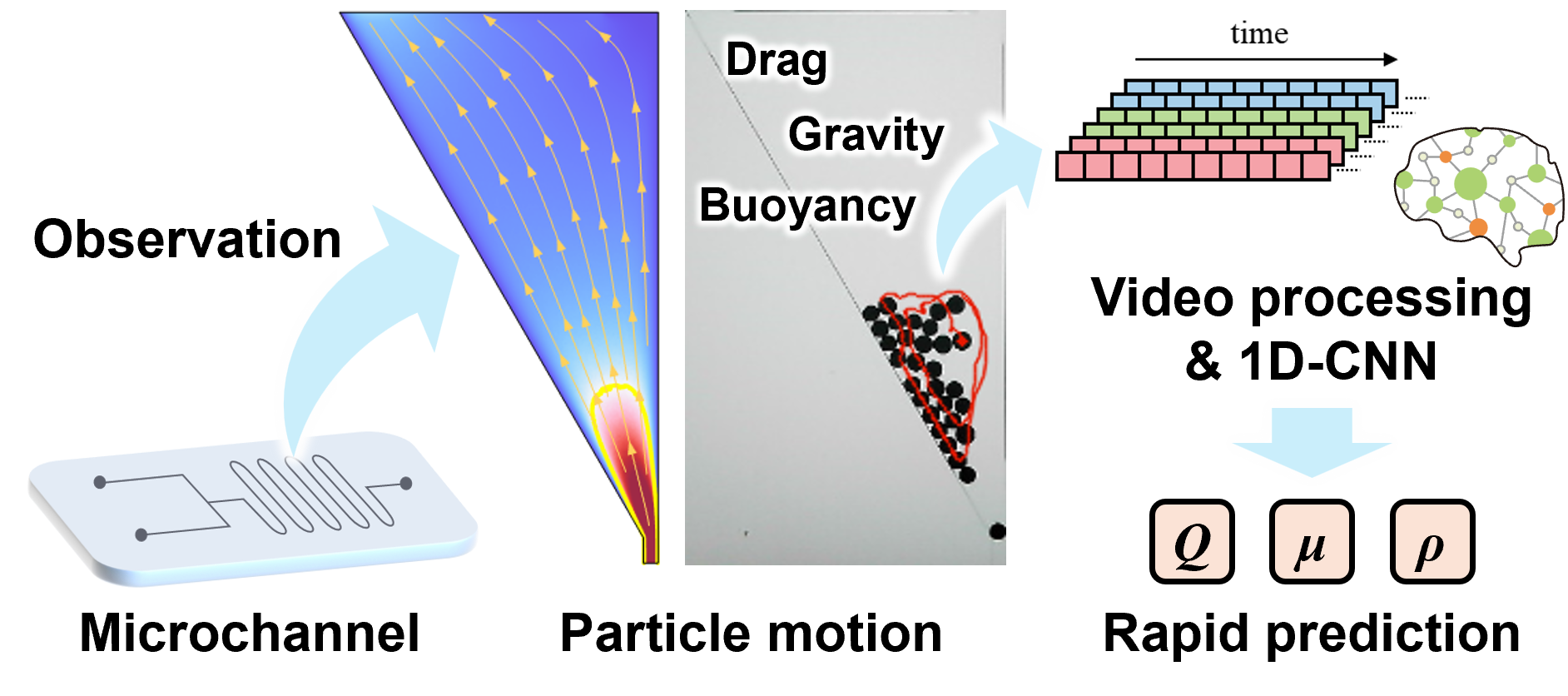
流路内のマイクロ粒子の運動を動画から検出・追跡し、その軌跡をAIで解析します。粒子に現れる流れの情報から、流量、粘度、密度を同時に推定するソフトセンサーを開発しています。

We detect and track microparticle motion in microchannels from video and analyze the trajectories with AI. From the flow information encoded in particle motion, the soft sensor simultaneously estimates flow rate, viscosity, and density.

流路形状、粒子配置、画像解析アルゴリズムを一体で設計し、小型・非侵襲・安価・迅速なフロープロセスモニタリングへつなげます。

We jointly design channel geometry, particle placement, and image-analysis algorithms to enable compact, non-invasive, low-cost, and rapid monitoring of flow processes.

  • Particle tracking
  • Computer vision
  • Microfluidics
  • Multi-property sensing

Research focusAIの力で「見える」動きから「見えない」情報を引き出す。

Research focusUsing AI to extract invisible properties from visible motion.

マイクロ流路内の粒子運動を動画解析し、1D-CNNで流量・粘度・密度を迅速推定する研究のグラフィカルアブストラクト
02 Published graphical abstract / Soft sensor
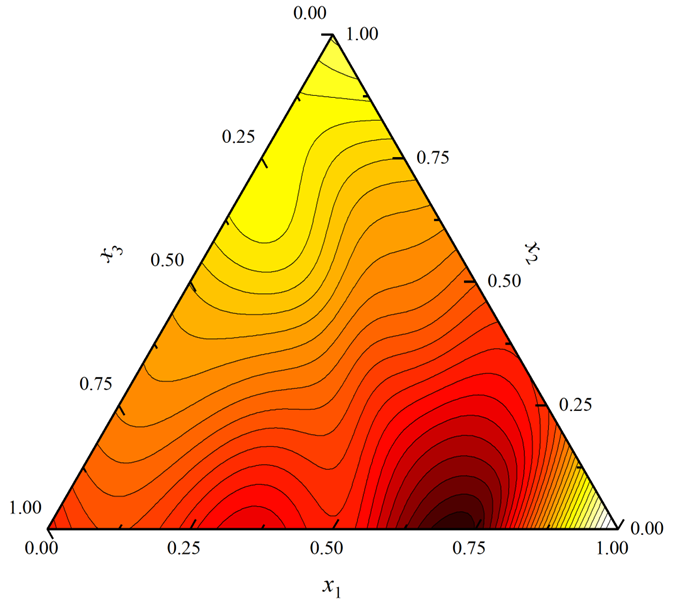
Conventional NN 物理制約なし No physical constraints
通常のニューラルネットワークにより、不自然なうねりが現れた三成分系物性の等高線図
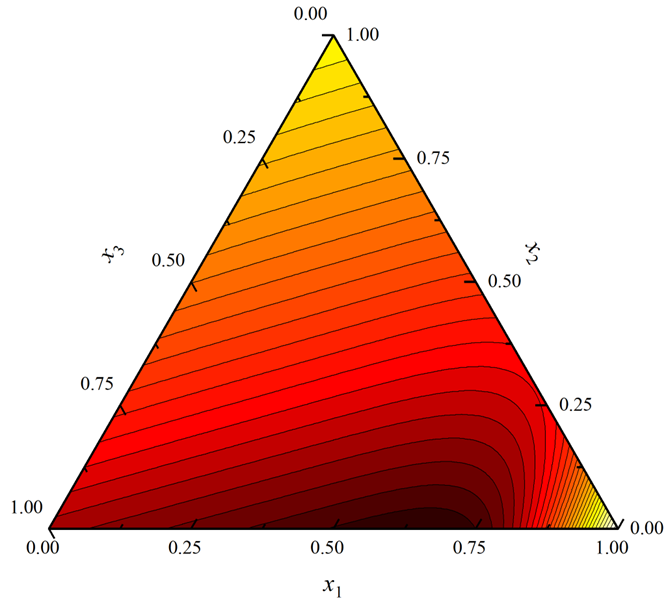
Physics-informed NN PINN / 物理制約あり PINN / Physics-informed
物理制約を組み込んだPINNにより、組成に対して滑らかに推算された三成分系物性の等高線図
03 Prediction surfaces / Conventional NN → PINN

03 / Physics-informed property prediction

精度と妥当性を
両立した物性推算
Accurate and physically plausible
property prediction

転移学習や物理制約の利用で、データが疎な多成分系でも信頼できる物性推算を目指します。

Transfer learning and physical constraints enable reliable prediction for multicomponent systems with sparse data.

分子構造から得た記述子や事前学習モデルを活用し、小規模データでも学習可能なモデルを構築します。さらに、勾配や変曲点などの物理的制約を組み込み、組成に対して不自然に振動しない予測へ導きます。

We use molecular descriptors and pretrained models to build models that learn from small datasets. Physical constraints on gradients and inflection points further guide predictions away from unphysical oscillations across composition space.

三成分系から十成分系まで既存手法が通用しない多成分混合物に対し、物理制約型機械学習(PINN)で滑らかな推算曲面を生成し、未測定領域の安定な推算を実現します。

For multicomponent mixtures ranging from ternary to ten-component systems, where conventional methods are often inadequate, physics-informed machine learning generates smooth prediction surfaces and supports stable estimates in unmeasured regions.

  • Transfer learning
  • Physics-informed ML
  • Molecular descriptors
  • Multicomponent systems

Research focus精度だけでなく、物理的に自然な「形」を持つ予測へ。

Research focusPredictions with not only high accuracy but also a physically plausible shape.

Summary

AI×化学工学で実現する
次世代型プロセス設計
Next-generation process design
through AI × chemical engineering

ビッグデータに依存しないAIを活用することで、既存手法と相性の良いプロセス設計支援ツールの実現を達成します。

By using AI that does not depend on big data, we develop process-design support tools that complement established engineering methods.

Research outputs 論文・講演・受賞実績を見る View publications, presentations, and awards